
What Is GOTS Certification? A Buyer's Guide to Organic Cotton Bags
GOTS certification (Global Organic Textile Standard) verifies that the cotton in a product is genuinely organic and tracked through every stage of processing — from farming through dyeing, manufacturing, and labeling — under both environmental and labor standards. For buyers sourcing cotton bags specifically marketed as organic or sustainable, it’s the certification that actually backs up that claim, rather than the raw material alone.
What GOTS Actually Covers — More Than Just the Raw Fiber
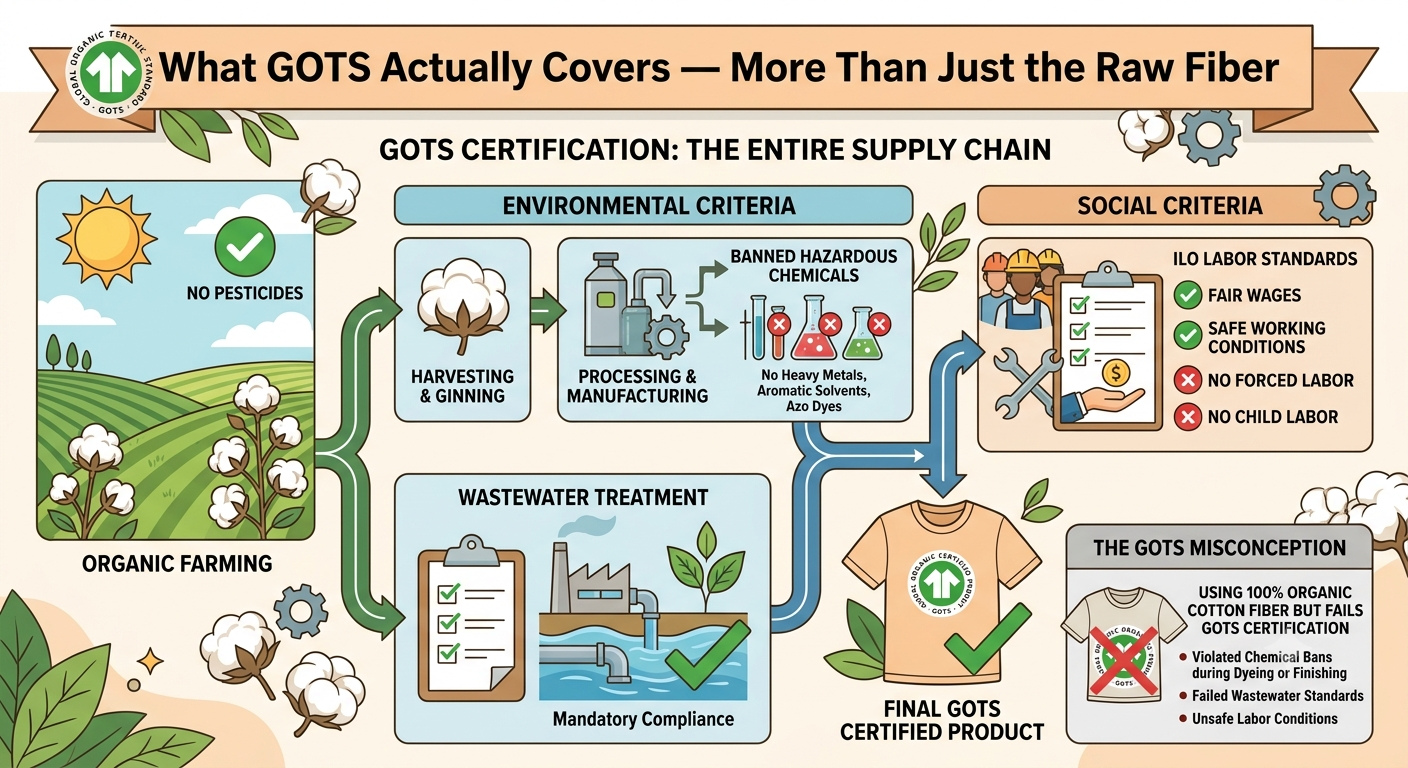
A common misconception is that “organic cotton” just means the cotton was grown without pesticides. GOTS certification requires that, but goes much further — it certifies the entire supply chain after harvesting too: banning hazardous chemical inputs (including certain heavy metals, aromatic solvents, and azo dyes), requiring wastewater treatment compliance at processing facilities, and mandating labor standards based on International Labour Organization (ILO) conventions, including no forced or child labor, fair wages, and safe working conditions. A product can use 100% organically grown cotton and still fail GOTS certification if the dyeing or finishing process doesn’t meet these standards.
The Two GOTS Label Grades
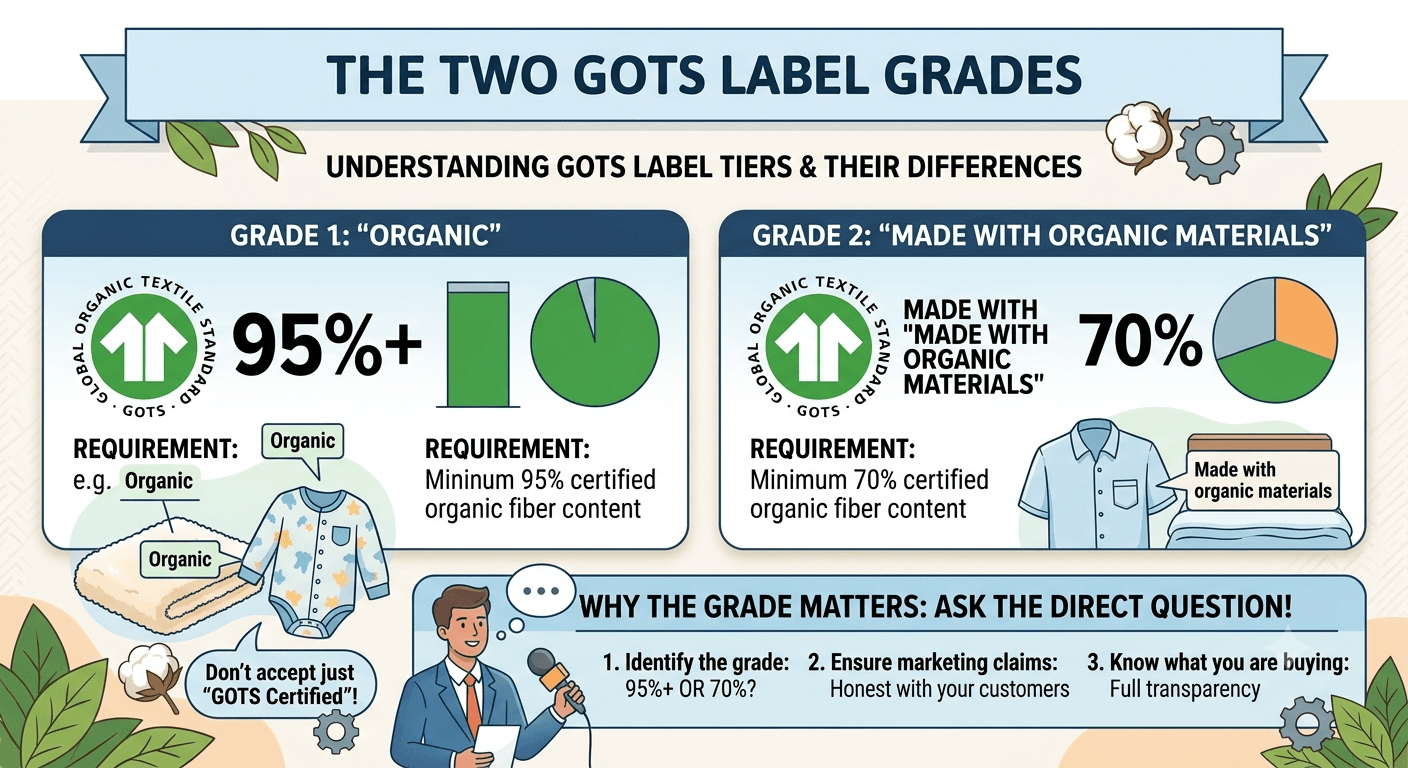
GOTS certification has two distinct label tiers, and buyers should know which one they’re actually being offered:
- “Organic” — requires a minimum of 95% certified organic fiber content
- “Made with organic materials” — requires a minimum of 70% certified organic fiber content
A product labeled simply “GOTS certified” without specifying the grade is worth a direct question — the difference between 70% and 95% organic content matters for any buyer marketing the product as organic to their own customers.
GOTS vs. OEKO-TEX vs. GRS — Three Different Things
These certifications are frequently confused, so it’s worth being precise: GOTS verifies organic fiber sourcing and processing standards; OEKO-TEX verifies the finished product is free of harmful chemicals; GRS verifies recycled material content. A product can hold any combination of the three, since each certifies something entirely separate. A cotton bag can be GOTS-certified organic without being OEKO-TEX certified (though in practice, GOTS’s chemical restrictions overlap significantly with OEKO-TEX’s testing scope), and GOTS has nothing to do with recycled content at all.
Read more in our OEKO-TEX guide – What Is OEKO-TEX Certification? A Buyer’s Guide to Chemical-Safe Bags.
Why This Matters for Buyers
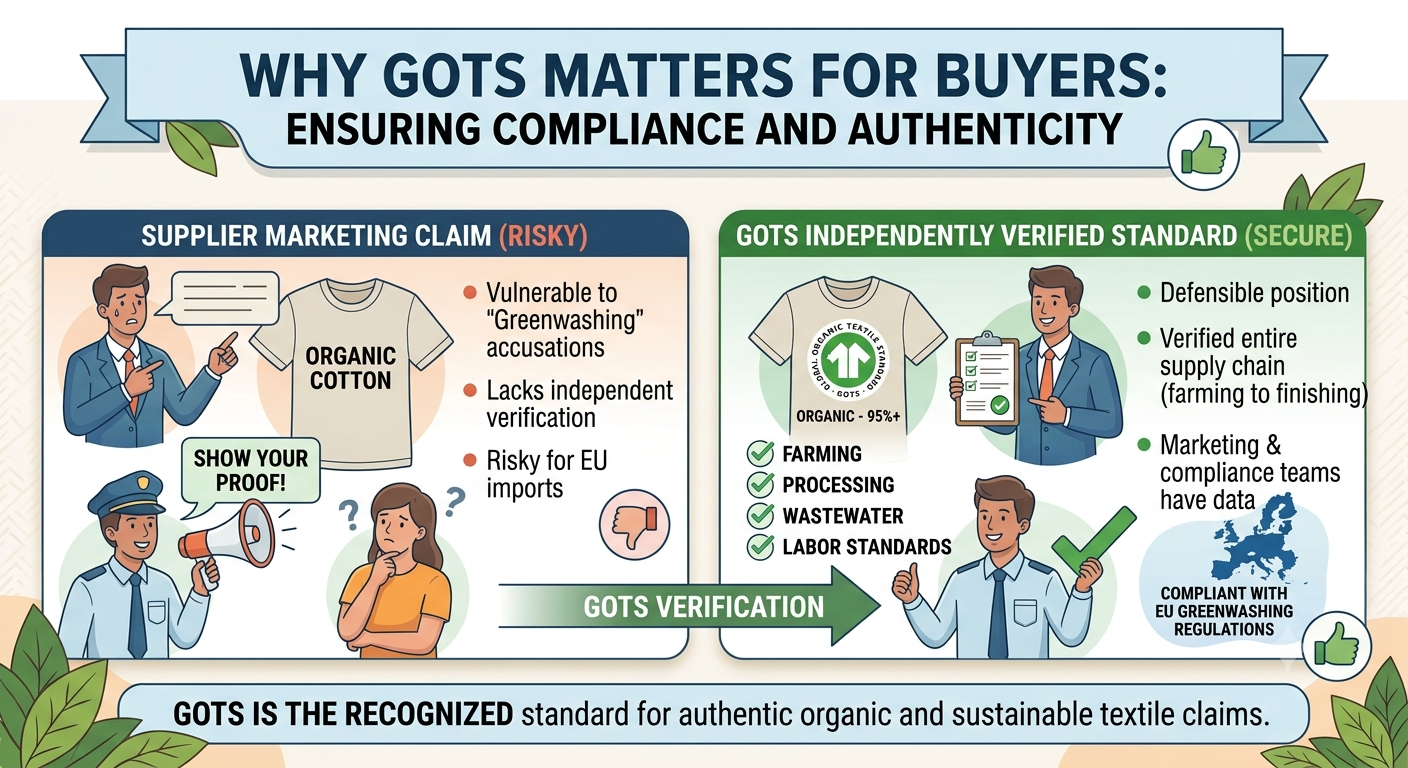
For brands marketing products as organic or sustainable — particularly in the EU, where greenwashing regulation has tightened significantly — GOTS certification is close to a requirement rather than a nice-to-have. It’s the difference between a supplier’s marketing claim and an independently verified standard your own compliance or marketing team can point to if a customer or regulator asks for proof.
Annual Audits Keep This Certification Meaningful
GOTS certification isn’t a one-time check — certified facilities undergo annual on-site inspections by independent certification bodies to maintain their status. This matters because it means a current GOTS certificate reflects an actual recent audit, not a claim made once years ago and never re-verified.
For factory-level labor verification, see SEDEX and SMETA audits – What Is SEDEX Certification? A Buyer’s Guide to Ethically Audited Bags.
What This Looks Like at Bags of Bengal
Bags of Bengal holds GOTS certification, supporting the organic sourcing and processing standards that buyers marketing products as organic or sustainable require from their supply chain. If you need our current GOTS certificate or supply chain documentation for your own compliance records, get in touch and we’ll share it directly.
For MOQ and lead times on cotton bags, see our wholesale guide – Bulk & Wholesale Jute Bags from India: MOQ, Pricing & Lead Times Explained, or the complete manufacturer guide – Jute Bag Manufacturer in India: A Complete Guide for Bulk & Export Buyers.
How to Verify a Supplier's GOTS Certificate
Ask for the certificate number and which label grade it covers (organic vs. made with organic materials), and check it against the GOTS public database rather than relying on a logo alone. Also confirm the certificate’s expiry date, since annual re-inspection means a lapsed certificate reflects a supplier that hasn’t been re-audited recently.
Frequently Asked Questions
What is GOTS certification?
GOTS (Global Organic Textile Standard) certification verifies that cotton is organically grown and processed under both environmental and labor standards through every stage of manufacturing, from farming through dyeing and finishing to labeling.
What's the difference between the two GOTS label grades?
The "organic" label requires a minimum of 95% certified organic fiber content, while "made with organic materials" requires a minimum of 70%. Buyers should confirm which grade a supplier's certificate covers, since this affects how the product can be marketed.
Is GOTS the same as OEKO-TEX certification?
No. GOTS certifies organic fiber sourcing and processing standards, including labor conditions; OEKO-TEX certifies that the finished product is free of harmful chemicals. A product can hold either certification independently of the other.
Does GOTS certification cover labor conditions, or just organic farming?
Both. GOTS requires compliance with International Labour Organization standards throughout the supply chain, including no forced or child labor, fair wages, and safe working conditions — not just organic cultivation of the raw cotton.
Is Bags of Bengal GOTS certified?
Yes, Bags of Bengal holds GOTS certification. Buyers who need certificate documentation for their own compliance or marketing records can request it directly.
How can I verify a manufacturer's GOTS certificate before ordering?
Ask for the certificate number and label grade and check it against the GOTS public certification database. Also confirm the expiry date, since GOTS requires annual re-inspection to maintain certification.